Solution · Process upgrade
Switching from Filter Bags to Pleated Elements
Filter bags are cheap per piece but offer little filtration area. In bag housings with high particle loads, this means frequent change-outs, contact with dirty bags and bypass risk at the bag collar. Pleated bag-replacement elements fit into the same housing and provide many times the surface area of a flat bag — without changing the piping.
Where in the process
The switch takes place in the existing bag housing — typically in process water, industrial water, chemical or food lines. The pleated element takes over the job of the bag: retaining particles and suspended solids. It does not remove dissolved substances.
What goes wrong without adequate filtration
- Small filtration area of flat bags — rapid rise in differential pressure
- Frequent change-outs with high labour and disposal effort
- Bypass risk at the bag collar and through bag deformation
- Fluctuating filtrate quality due to bag stretching under pressure
How it works
- 1
Identify the housing
Bag size (e.g. #1 or #2) and housing type determine the matching pleated element.
- 2
Choose rating and media
Micron rating and media follow the process — in the reference project PP, 5 µm.
- 3
Swap the bag
The pleated element is inserted instead of the bag — no piping changes required.
- 4
Longer intervals
The larger pleated area holds more dirt and extends the change-out interval.
Typical filtration requirements
- Fit in the existing bag housing without modification
- Significantly larger filtration area than a filter bag
- Defined micron rating and reliable seal
- Materials suitable for the medium (e.g. FDA-compliant where required)
Why high-flow wins here
Selection & sizing factors
Sizing & selection
Reference project (Western Europe): industrial water, bag housings for Pall Marksman elements. Supplied: compatible Pall Marksman replacement bag-pleated elements, size #1, polypropylene, 5 µm, 1.51 m² filtration area, EPDM gasket, FDA-compliant, max. 80 °C, recommended change-out at 2.1–2.4 bar differential. Tell us bag size, housing type, medium and target rating.
Real project references
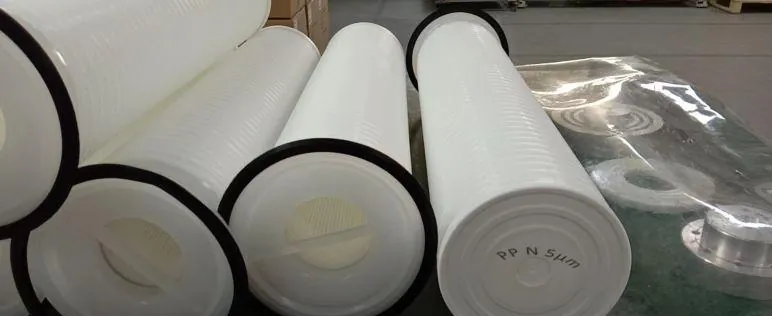
R+F supplies compatible replacement elements and housings. Brand names only identify the original part being replaced.
The right housing for this solution
In most cases the existing bag housing stays in place. If throughput grows beyond what bag housings can handle, a high-flow housing with large-format elements is the next step — we configure or custom-build it and ship worldwide.
Operational impact
Relevant industries
Related solutions
Placed wherever clean particulate-free water enters or moves through the process — intake polishing, make-up water, or protection ahead of sensitive equipment.
View solutionImmediately upstream of the equipment being protected. It is a guard/prefiltration barrier targeting particulate that would abrade, plug or foul the downstream asset.
View solutionInline on the process stream — product filtration, catalyst/resin protection, or intermediate clean-up. It removes particulate from the fluid; media are selected for chemical compatibility.
View solutionFrequently asked questions
Can I use pleated elements in my existing bag housing?
Yes, in most cases. Pleated bag-replacement elements are made in common bag sizes such as #1 and fit into the existing housing. Tell us the housing and we confirm the match.
How much filtration area does a pleated element in size #1 have?
In our reference project, the compatible Pall Marksman replacement element in size #1 has 1.51 m² filtration area at 5 µm — considerably more than a flat filter bag of the same size.
Does the pleated element remove dissolved substances?
No. Like the filter bag, it retains particles and suspended solids — but with more area and a longer service life.
Are the elements suitable for food applications?
FDA-compliant materials are available — the reference elements are FDA-compliant. Tell us your application.
The right solution for your process?
Tell us your flow rate, medium and target rating — we recommend the element and, if required, the matching housing.