Solution · Seawater & desalination
Seawater Pre-Filtration with Duplex or FRP Housings
Seawater intakes carry sand, silt, shell fragments and organic particles — in a chloride-rich medium that attacks standard stainless steel. High-flow pre-filtration retains these solids ahead of RO membranes, heat exchangers and injection pumps. The decisive question is the housing material: duplex steel or fiber-reinforced plastic (FRP).
Where in the process
The stage sits after the intake screens and coarse/media filtration and before RO membranes, plate heat exchangers or injection systems. It removes particles and suspended solids — it does not remove dissolved salts; that is done by the RO membrane.
What goes wrong without adequate filtration
- Chlorides cause pitting and crevice corrosion in standard stainless housings
- Fine particles and silt foul RO membranes and plate heat exchangers
- Very high flow rates require many housings if element capacity is small
- Corrosion damage on the housing leads to unplanned shutdowns
How it works
- 1
Choose the housing material
Duplex 2205 for high pressure and large flows with high pitting resistance; FRP for full corrosion resistance in seawater.
- 2
Size the element count
The number of 60" elements per housing is set by the flow — e.g. 14 × 60" for 700 m³/h.
- 3
Retain particles
Large-area PP elements retain sand, silt and suspended solids.
- 4
Protect downstream
RO membranes, exchangers and pumps receive feed with fewer particles.
Typical filtration requirements
- Housing material resistant to chloride-rich seawater
- Large element area for high flow at low differential pressure
- Media and gaskets compatible with seawater
- Housing design to a recognised pressure-vessel standard
Why high-flow wins here
Selection & sizing factors
Sizing & selection
References: (1) Northern Europe — 2 duplex 2205 housings, each 14 × 60" elements, DN250 flange, 10 bar design pressure, shell 1000 × 5 mm, 700 m³/h each at 10 bar / 25 °C. (2) Middle East — 25 vertical FRP housings to ASME for 60" elements, 10 bar design pressure, DN80 side opening, 55 × 25 m³/h for SWRO at 4 bar / 25 °C. (3) Western Europe — 48 compatible 60" Pall replacement PP elements with 8 m² area and EPDM gaskets for seawater. Tell us flow, pressure, temperature and installation situation.
Real project references
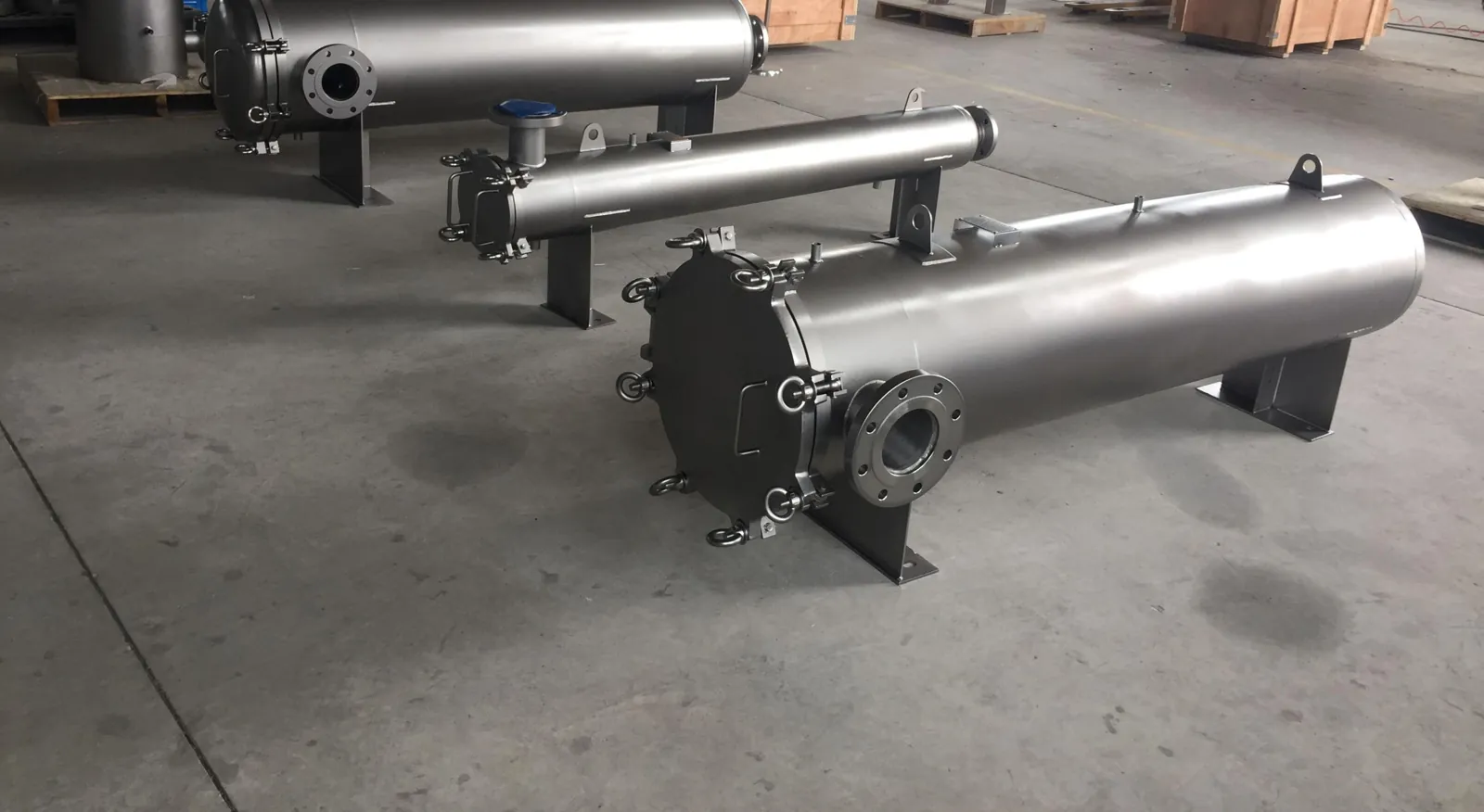
Northern Europe · Seawater
Duplex 2205 housing 14 × 60" for 700 m³/h seawater
- Material
- Duplex 2205
- Configuration
- 14 × 60" high-flow elements
- Design pressure
- 10 bar
- Connection
- DN250 flange
Middle East · Seawater ahead of reverse osmosis (SWRO)
FRP high-flow housing 60" for seawater desalination (SWRO)
- Material
- FRP (fiber-reinforced plastic), vertical
- Design standard
- ASME
- Element length
- 60 inch
- Design pressure
- 10 bar
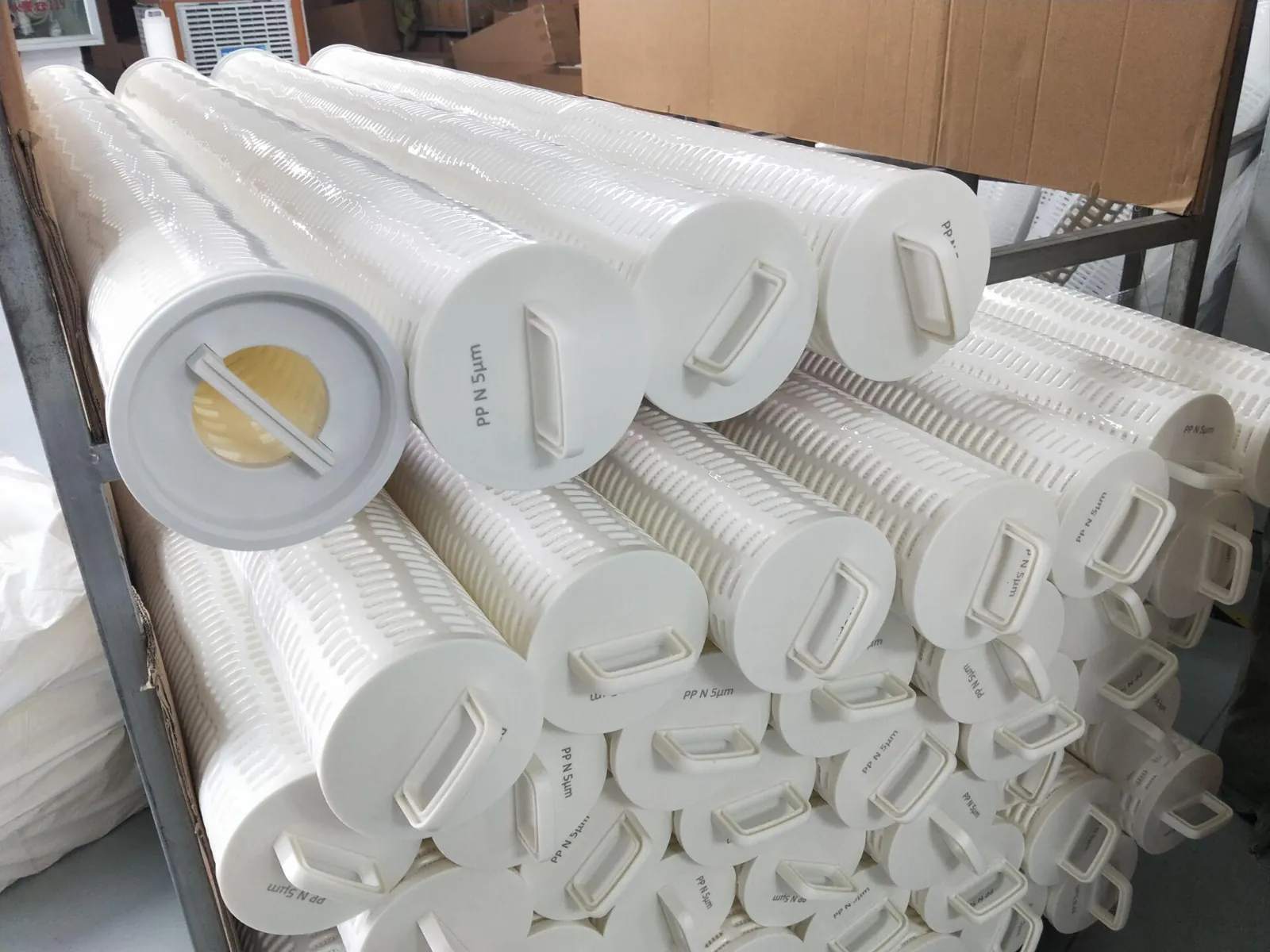
Western Europe · Seawater
Pall replacement: 60" PP element with 8 m² for seawater
- Material
- PP
- Length
- 60 inch
- Filtration area
- 8 m²
- Gasket
- EPDM
R+F supplies compatible replacement elements and housings. Brand names only identify the original part being replaced.
The right housing for this solution
For seawater, the housing material is the key decision: duplex 2205 for metallic pressure vessels with high pitting resistance, FRP where full corrosion resistance and low weight matter. We configure housings to your flow, connections and standard and build custom designs — shipped worldwide. Existing housings can be fitted with compatible replacement elements.
Operational impact
Relevant industries
Related solutions
Positioned after the dissolved-air flotation / media filtration stage and before the high-pressure SWRO pumps. It handles particulate breakthrough and protects the membranes; desalting is done by the membranes themselves.
View solutionThis stage sits between the pretreatment (media filters, softening, dosing) and the RO high-pressure pumps — the last mechanical barrier before the membranes. Its job is particulate removal, not the removal of dissolved salts, which the membrane itself handles.
View solutionInstalled as a side-stream loop on the cooling circuit (open tower or closed loop), continuously filtering a slipstream of the circulating water. It targets particulate; it is not a chemical-treatment substitute.
View solutionFrequently asked questions
Duplex or FRP — which housing for seawater?
Duplex 2205 is a metallic pressure vessel with high pitting resistance — e.g. 14 × 60" for 700 m³/h at 10 bar. FRP is fully corrosion-resistant and non-metallic — e.g. vertical ASME housings for SWRO pre-filtration.
Does seawater pre-filtration remove salt?
No. The high-flow stage removes particles and suspended solids. Dissolved salts are removed by the reverse osmosis membrane.
How many 60" elements are needed for 700 m³/h?
In our Northern European reference, 14 × 60" elements per duplex housing handle 700 m³/h. The exact count depends on the particle load and target differential pressure.
Can you build a custom seawater housing?
Yes — we configure and custom-build high-flow housings in duplex or FRP to your flow, pressure and connections, and ship worldwide.
The right solution for your process?
Tell us your flow rate, medium and target rating — we recommend the element and, if required, the matching housing.